A Roof Leak in the Middle of Winter: What to Do
Why winter leaks are trickier than summer ones, and exactly what to do the moment you spot one.
September 22, 2026 · 3 min read
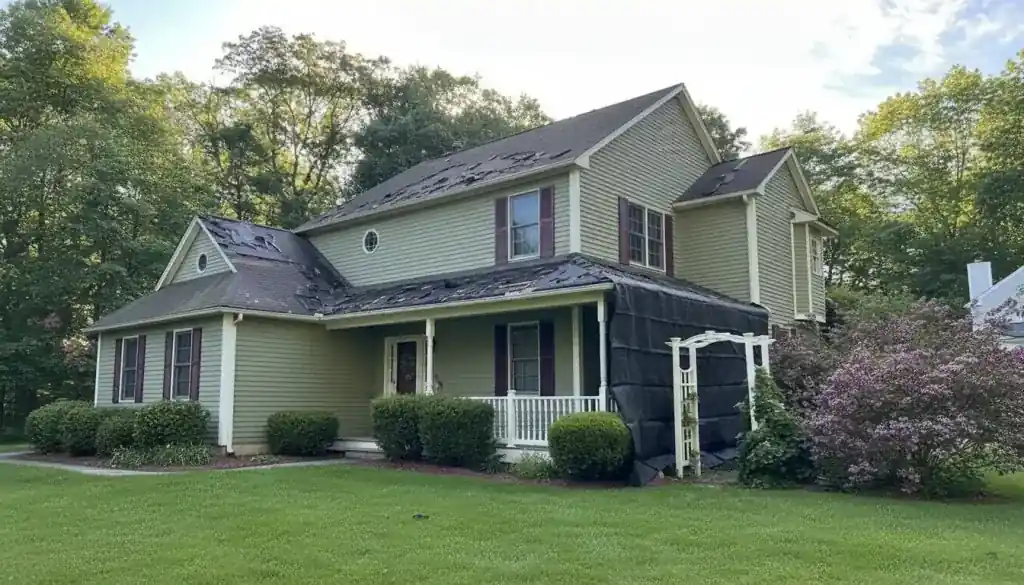
A leak that shows up during a cold snap, or right in the middle of a January thaw, doesn't behave the way a summer leak does. The water is slower, the source is harder to see, and the roof itself is often buried under snow or ice while you're trying to figure out what's going on, which makes the whole thing feel a lot more confusing than a leak that shows up during an ordinary summer rain.
Where winter leaks usually start
- Valleys and flashing, where ice tends to sit the longest
- Roof vents and boots that have gone stiff or cracked with age
- A spot where an ice dam has already backed water up under the shingles
- Bathroom or kitchen exhaust fans venting warm, moist air into the attic instead of outside
Condensation or an actual leak
Not every damp spot in a cold snap is a leak in the roof itself. Warm, moist household air that reaches an unheated attic can condense on cold framing or on the underside of the roof deck, drip, and leave a stain that looks exactly like a leak from a ceiling below. The difference matters, because one is fixed on the roof and the other is fixed by dealing with ventilation and where household air is escaping. A frost pattern on nails or sheathing in the attic, rather than a clear water trail from one spot, is often a clue it's condensation rather than a straightforward leak, but the honest answer usually needs someone to actually look rather than guess from the symptoms alone over the phone.
Why winter leaks are harder to trace
Water doesn't always show up under the actual gap it came through. In winter, it often travels sideways along frozen decking or down a rafter before finally finding a way through the ceiling below. Ice can hide the real entry point entirely until a thaw finally lets everything move again, which means the stain on your ceiling might be several feet from where the water is actually getting in. Guessing at the source over the phone rarely gets it right, and it usually means someone has to come out a second time anyway.
What to do the moment you spot one
- Catch the water, a bucket or towels buy you time while it's handled
- Note exactly where the stain first appeared and whether it's spreading
- Stay off a snow or ice covered roof yourself
- Call or text a photo of the ceiling or attic so it can be looked at with real information, not a guess
It's tempting to wait out a winter leak, especially a slow one, until warmer weather makes it easier to deal with. The problem is that the same freeze and thaw cycle that started the leak keeps repeating every time the temperature swings, which means a slow drip in January can easily still be dripping in March if nothing gets done in between. A leak that gets looked at while it's still small stays small. One that sits through an entire Rhode Island winter usually doesn't.
What happens once you call
Tim answers his own phone, day or night, and would rather come look at it directly than quote blind over the phone in the middle of winter. A Lincoln homeowner's winter leak turned out to be a cracked vent boot and a handful of lifted shingles, fixed with a new boot, matching shingles, and a check of the surrounding flashing while the crew was already up there. That's typical of a real winter fix, nothing more sold than what the roof actually needed.
Winter repairs take a little more care than a summer patch. Shingles get stiff and brittle in the cold and have to be handled carefully so they don't crack during the fix itself, and any exposed area gets sealed and protected properly before the crew leaves, so the house isn't left worse off than before the repair started. None of that changes the honest approach: fix what's actually wrong, check what's around it while already up there, and don't sell more than the roof needs just because it's winter and the homeowner is anxious to get it handled.
If you've got a leak right now, or a stain that showed up overnight and you're not sure what's behind it, call or text Tim at 401-233-ROOF. He's reachable around the clock, every day of the week, and he'll give you a straight, written answer once he's actually seen it in person.
Tim's Roofing and Siding, 401-233-ROOF
Call 401-233-ROOFMore articles
How Long Does a Roof Last in Rhode Island?
What actually wears a Northern Rhode Island roof out, and the signs worth paying attention to before a small problem gets expensive.
Roof Repair or Replace? How to Actually Tell
A plain look at how to tell whether a problem calls for a repair, or it is honestly time to replace the whole roof.