Woonsocket & Northern RI · winter
Heavy wet Rhode Island snow, taken off the roof before it becomes a bigger problem.
Heavy, wet snow taken off the roof before it loads the framing or feeds an ice dam, without tearing up the shingles underneath.
Chapter 01
When the load actually matters
New England snow is rarely light. A nor'easter that drops two feet of wet, heavy snow puts far more weight on a roof than the same depth of dry powder, and that weight only grows if rain falls on top of it or a warm afternoon partially melts it before the next freeze locks it back in. Most roofs are built with real margin, but an older roof, a low-slope section, a porch roof tied into a taller wall, or a roof that already has a second layer of snow sitting on unmelted ice is a different situation.
The other reason the snow itself matters, beyond weight, is what it sets up next: snow sitting on a roof through a freeze-thaw cycle is exactly how an ice dam gets started at the eaves. Taking the load off the field of the roof while it is still snow, before it compacts into ice, is the cheaper problem to solve.
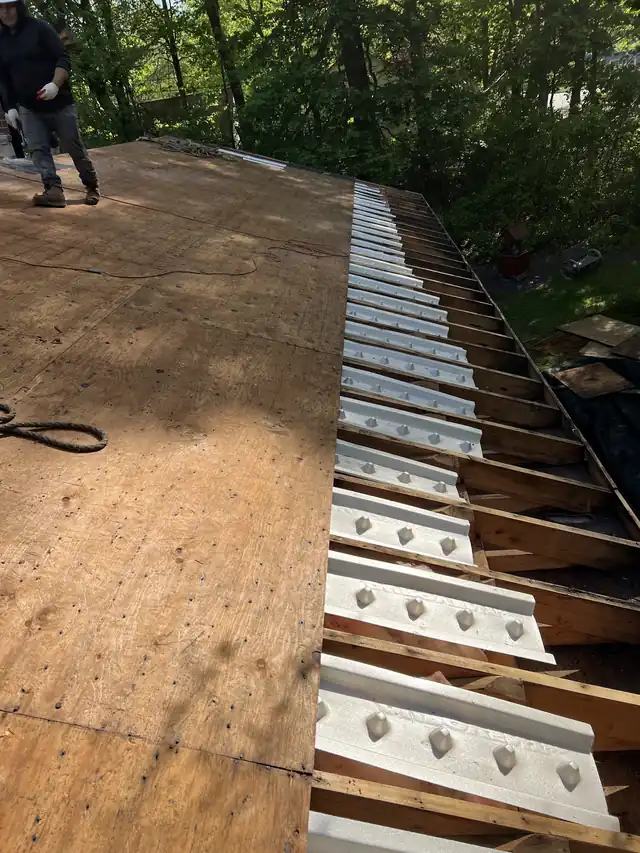
Bare plywood roof deck with a new drip edge along the eave after a Rhode Island tear-off
How Tim clears a roof
The first option is always raking from the ground. A roof rake with a long enough handle pulls snow off the lower few feet of most single-story and split-level roofs without anyone leaving the ground, and for a lot of Woonsocket and Northern Rhode Island homes that is enough to relieve the load at the eaves where ice dams start.
When a roof is steeper, taller, or has sections a ground rake can't reach safely, Tim sends a crew up with roof-rated equipment instead of a shovel. The rule the whole crew works to is simple: never chip or scrape at the shingles themselves. Ice and compacted snow bonded to a shingle course comes off in sections, worked with the slope, leaving a buffer layer rather than digging down to bare shingle with a metal edge. Eaves, valleys and roof vents get cleared first, because those are the points where water actually needs somewhere to go once anything starts to melt.
On the 35-square North Smithfield roof Tim's crew replaced in one day, a full six feet of ice and water shield went up from the eaves for real ice-dam protection through a Rhode Island winter, so the protection is built in underneath the shingles instead of depending on a rake every storm.
Chapter 03
What to watch after the roof is cleared
A cleared roof isn't a permanent fix if the same eaves and valleys keep collecting snow and refreezing every storm. Watch for icicles forming along one section more than the rest of the roofline, that usually means less heat is escaping there or the ice and water shield underneath is older and thinner than the rest of the roof. Watch for staining creeping across a ceiling below an eave, which is the same signal as an ice dam starting.
If the same section needs clearing after every storm, that is worth a call rather than another rake. Sometimes it's a ventilation or insulation issue in the attic above it, and sometimes the ice and water shield at that eave is simply due for an update the next time the roof is worked on. Either way, Tim's 15-year labor warranty covers his own workmanship on any repair tied to it, and the same crew that clears the snow is the crew that would fix what's underneath it.
Tim's Roofing and Siding, Woonsocket, RI. RI Reg. #25145, licensed and insured. Call or text 401-233-ROOF.
From a real job sheet
Six feet of ice and water shield, so the next snow load has somewhere to drain.
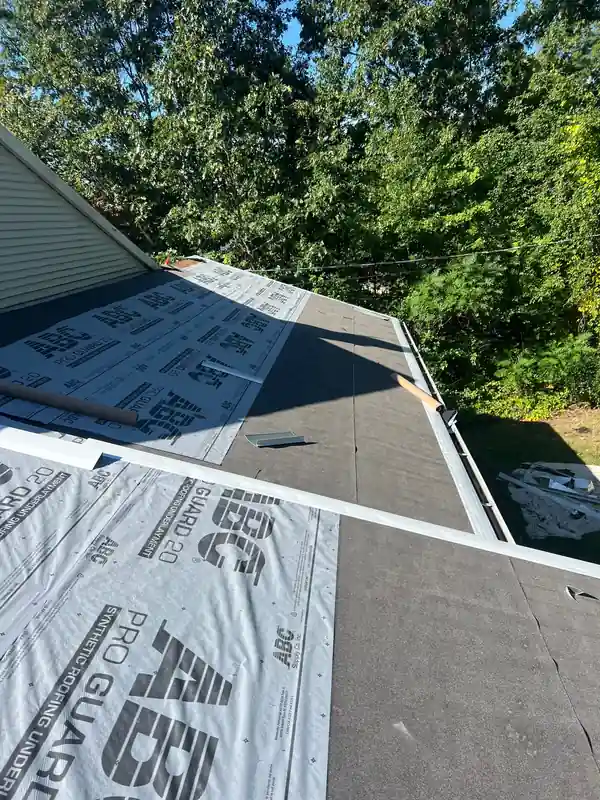
We ran a full six feet of ice-and-water shield up from the eaves for real ice-dam protection through a Rhode Island winter, then dried it in with synthetic underlayment and finished with new architectural shingles, new chimney flashing, and a ridge vent.
The crew pulled up at 6:30am, started at 7am, and the whole job (tear-off, deck repair, new roof, and a magnet-swept cleanup) was done in one day.
Related work
Roof Repair
Leaks traced to the actual cause: a cracked vent boot, lifted shingles, tired flashing. Fixed properly, with no push to sell a roof that isn't due.
24/7 Emergency Roof Repair
Storm damage or water coming through a ceiling. Call or text any hour; Tim answers his own phone, tarps it fast and comes back to repair it right.
Ice Dam Removal
Ice ridges at the eaves opened up so meltwater drains off the roof instead of backing under the shingles and into the ceiling.
See every town Tim covers on service areas or get a written price with a free estimate.