How Long Does a Roof Last in Rhode Island?
What actually wears a Northern Rhode Island roof out, and the signs worth paying attention to before a small problem gets expensive.
September 22, 2026 · 3 min read
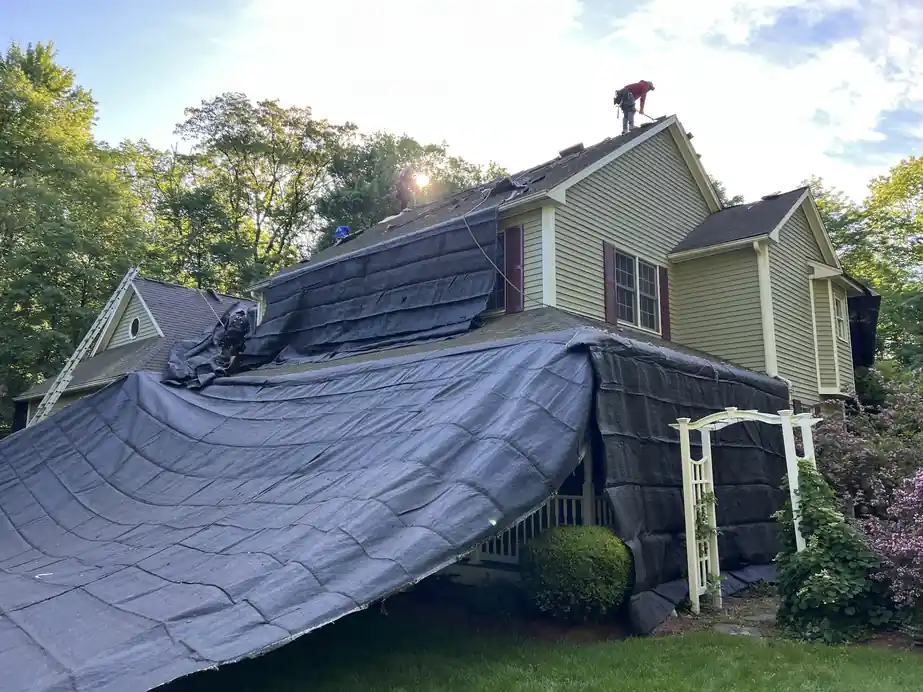
A roof does not fail on a calendar. It fails because of what has actually landed on it, storm after storm, winter after winter. Two roofs put on the same week, on two identical houses, can age at very different rates depending on how they were installed, how well the attic underneath them breathes, and how many rough Rhode Island winters they have already absorbed.
What actually wears a roof out here
Freeze thaw cycles do more damage in this part of the country than almost anything else. Water finds a small crack, freezes, expands it a little, then melts and does it again the next week. Add heavy wet snow sitting on a roof for days at a time, ice building up along the eaves, and a hot summer sun baking the shingles, and a roof simply works harder here than it would somewhere with a milder climate. A poorly ventilated attic makes all of it worse, trapping heat and moisture that cook shingles slowly from underneath, where nobody can see it happening until it shows up as a problem outside.
How long shingles typically hold up
There's no single honest number here, and anyone who gives you one without looking at your roof is guessing. As a general rule, older three tab shingles tend to show their age sooner than architectural shingles, and a roof with good attic ventilation tends to hold up longer than one without it. What matters more than the calendar is how the roof has actually been treated: the quality of the original install, whether ice and water shield was used at the eaves and valleys, and how many bad winters it has absorbed. Two identical roofs on two identical houses can age years apart based on those details alone, which is exactly why we look at the roof itself instead of just asking how old it is.
Signs a roof is getting close
- Granules collecting in the gutters or piling up at the base of a downspout
- Shingles curling up at the corners or cupping in the middle
- Dark streaking or patches of moss, especially on shaded north facing slopes
- Soft or spongy spots underfoot, a sign the decking below has started to go
- Daylight visible through the roof boards from inside the attic
- Shingles cracking, lifting, or going missing after a windy stretch
Any one of these by itself is not an emergency. A few of them together, or one of them getting noticeably worse over just a couple of months, is a good reason to have someone actually get up there and look before a small problem turns into water stains on a ceiling.
What we found underneath one roof that looked fine
On a recent tear off in North Smithfield, we pulled the old shingles off a roof that looked reasonable enough from the driveway. Underneath, we found two rotted sheets of plywood decking, caused by a valley that a previous roofer had woven the wrong way years earlier. Nobody could have known that from the ground or from a photo. We cut out the rotted decking, replaced it, and rewove the valley correctly before the new architectural shingles went on. That is the part of a roof's real condition that only shows up once somebody is actually standing on it, not from a drive by or a guess.
A few habits that stretch a roof's life
- Keep gutters clear so water isn't backing up under the shingle edge
- Make sure attic vents aren't blocked by insulation pushed up against them
- Trim back branches that scrape shingles every time the wind picks up
- Deal with a small leak the week you notice it, not the season after
None of that guarantees a roof a specific number of years, and we won't pretend it does, but it makes a real difference over time, and it is worth thinking about even on a roof that isn't giving you any trouble yet.
Get an honest read before you spend a dollar
Tim measures every roof himself and hands over a written price before he leaves, no salesman involved and nothing you have to decide on the spot. If your roof still has good years left in it, he will tell you that plainly instead of finding a reason to replace it. If you are seeing any of the signs above, or you just want a second, honest opinion, call or text Tim at 401-233-ROOF. He is on every job himself with his crew, and most Rhode Island roofs get torn off, repaired underneath where needed, and finished the same day.
Tim's Roofing and Siding, 401-233-ROOF
Call 401-233-ROOFMore articles
Roof Repair or Replace? How to Actually Tell
A plain look at how to tell whether a problem calls for a repair, or it is honestly time to replace the whole roof.
Ice Dams on Rhode Island Roofs, Explained
How ice dams actually form on a Rhode Island roof, and what genuinely helps keep water out from under the shingles.