Woonsocket & Northern RI · winter
A ridge of ice at the eave, and the water backing up behind it, opened up the right way.
Ice ridges at the eaves opened up so meltwater drains off the roof instead of backing under the shingles and into the ceiling.
Chapter 01
How an ice dam actually forms
An ice dam starts inside the house, not on the roof. Heat leaking up into the attic warms the underside of the roof deck even while the outside air is well below freezing. That warmth melts the bottom layer of snow sitting on the upper part of the roof, and the meltwater runs down the slope until it reaches the eave, the part of the roof that overhangs the wall and stays cold because there's no heated attic space behind it. There, with nothing warming it from below, the water refreezes into a ridge of ice.
Each cycle adds to that ridge. Once it's thick enough, it acts exactly like a dam: meltwater coming down from higher on the roof has nowhere to go but sideways and backward, under the shingle courses above it, and from there straight into the roof deck, the insulation, and eventually a ceiling or a wall inside the house.
Rotted roof decking exposed at a valley under old shingles after ice-dam water damage
The signs, and how Tim opens it up
The visible signs are usually icicles hanging heavier along one stretch of eave than the rest of the roofline, a stained or bubbling patch on a ceiling near an exterior wall, or water showing up at the top of an interior wall where nobody would expect a leak from a flat rainstorm. Any one of those is worth a call before it gets worse.
Once Tim is on the roof, the fix is not a hammer and a chisel. Chipping straight at an ice ridge risks cracking or tearing the shingles underneath it, which trades one problem for a bigger one. Instead, the ice gets worked in controlled sections, warmed and released rather than broken loose, opening a channel through the dam so water trapped behind it has somewhere to drain immediately. That relieves the backup fast, without turning a repair call into a full shingle replacement.
Once the immediate water is moving again, Tim checks what's underneath: whether the ice and water shield at that eave held, whether any decking got soft from repeated soaking, and whether the shingles themselves survived the freeze-thaw cycle intact.
Chapter 03
Stopping it from coming back
Opening the dam solves this winter. Stopping the next one usually comes down to three things: ice and water shield installed correctly along the eaves so any meltwater that does back up has a waterproof layer underneath it instead of bare decking, attic ventilation that lets cold outside air keep the underside of the roof cold and even rather than warm in patches, and attic insulation that keeps house heat where it belongs instead of leaking up into the roof deck.
On the North Smithfield roof Tim's crew rebuilt, six full feet of ice and water shield went up from every eave specifically for this reason, real protection built into the roof rather than a rake and a call every storm. If ice dams keep forming at the same spot year after year, that's usually the conversation worth having: whether it's a ventilation gap, an insulation gap, or simply an eave that's due for that shield the next time work is done there. It's covered by the same 15-year labor warranty as everything else Tim installs.
Tim's Roofing and Siding, Woonsocket, RI. RI Reg. #25145, licensed and insured. Call or text 401-233-ROOF.
From a real job sheet
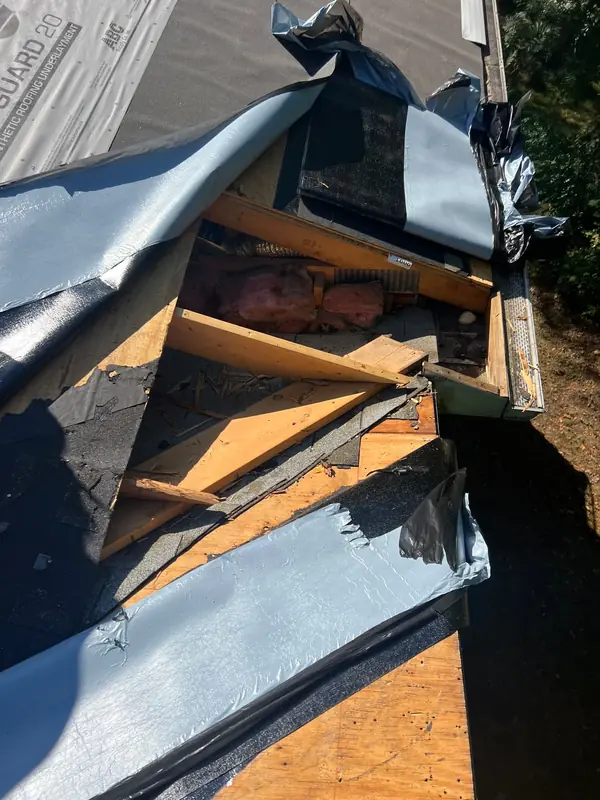
What an ice dam had already done before this roof came off.
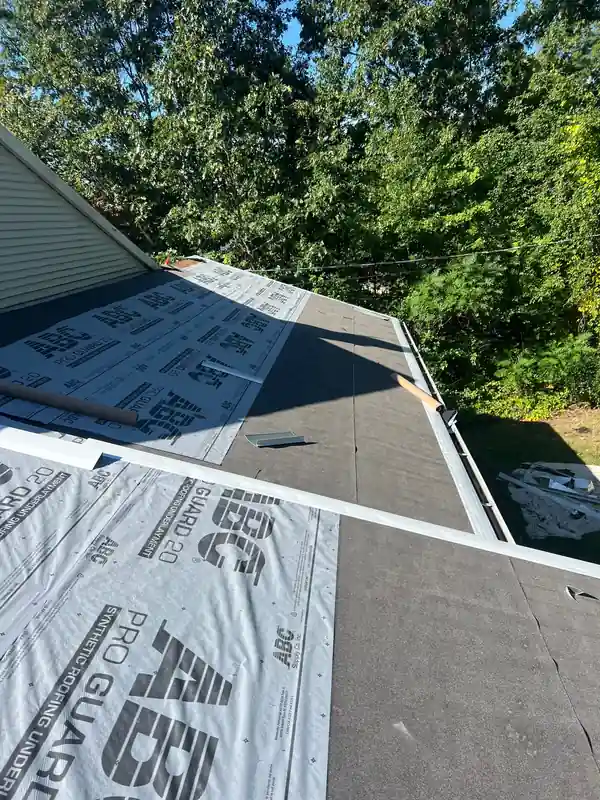
On the tear-off we found two rotted sheets of plywood caused by an improper valley weave from the last roofer. We cut out the rot, replaced the decking, and wove the new valley the right way.
We ran a full six feet of ice-and-water shield up from the eaves for real ice-dam protection through a Rhode Island winter, then dried it in with synthetic underlayment and finished with new architectural shingles, new chimney flashing, and a ridge vent.
Related work
Roof Repair
Leaks traced to the actual cause: a cracked vent boot, lifted shingles, tired flashing. Fixed properly, with no push to sell a roof that isn't due.
24/7 Emergency Roof Repair
Storm damage or water coming through a ceiling. Call or text any hour; Tim answers his own phone, tarps it fast and comes back to repair it right.
Roof Snow Removal
Heavy, wet snow taken off the roof before it loads the framing or feeds an ice dam, without tearing up the shingles underneath.
See every town Tim covers on service areas or get a written price with a free estimate.