Roof Snow Removal: When It's Actually Time to Call
The real signs a roof is carrying too much snow, and why clearing it yourself is riskier than it looks.
September 22, 2026 · 3 min read
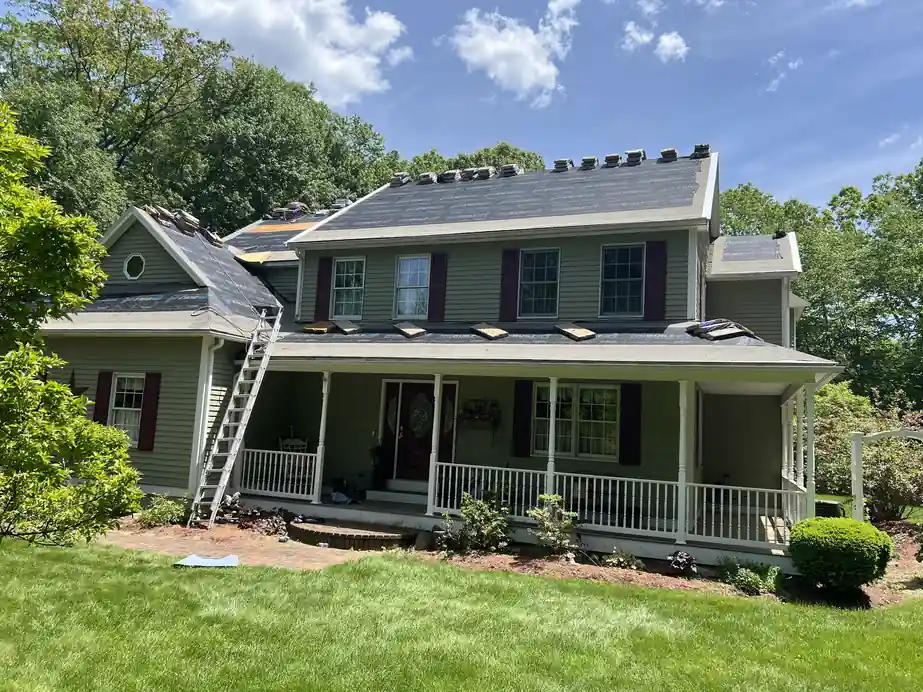
Snow sitting on a roof usually isn't the problem people think it is. A dry, powdery snowfall is light and mostly harmless, and most roofs carry it without any trouble at all. A heavy, wet nor'easter followed by another storm stacked right on top of it is a different situation entirely, and that's when the calls start coming in.
Signs a roof is carrying too much weight
- Doors and windows on the top floor getting hard to open or latch
- Popping or cracking sounds from the ceiling that weren't there before
- Sagging along a ridge line or noticeably between rafters
- New cracks near where a ceiling meets a wall
- An exterior door that used to close easily now sticking in its frame
Any single one of these is worth a phone call. It's not necessarily an emergency the moment you notice it, but it's not something to wait out through another storm either.
Why one storm's snow isn't like the next
Light, dry snow from a cold, quiet system barely registers on a roof. A heavy nor'easter, or a storm that turns to rain partway through and then refreezes, is a different animal entirely, wet snow and ice packed together hold onto a roof and add up fast, especially once a second or third storm lands on top of a layer that never fully melted. A roof that shrugged off the first storm of the season can be in real trouble by the third one if nothing has come off in between. There's no simple number that applies to every roof, since pitch, shape, and how the snow layered up all change the picture, which is exactly why the visible signs matter more than trying to estimate weight yourself.
What a roof rake can and can't do
A roof rake used correctly from the ground can clear snow off lower, reachable sections of a roof and take some pressure off before more snow stacks on top. What it can't do is reach a steep upper slope or a roof with a complicated shape, and used the wrong way, stretched too far off a ladder or dragged hard across the shingles, it can strip granules or crack shingles that were otherwise fine. It's a reasonable first step on a one story ranch, and a lot less useful on a tall colonial with a steep pitch.
Why climbing up there yourself is a bad idea
Fresh snow hides ice underneath it. A pitch that's easy to walk in July turns into a real fall risk in January, and the added weight of the snow itself makes footing unpredictable in ways you don't expect. A shovel or blower handled carelessly can also do damage of its own, stripping granules or cracking shingles that had nothing wrong with them before someone got up there.
What professional snow removal actually looks like
Done right, roof snow removal is careful and deliberate, working from the eaves upward, using tools that clear snow without gouging the shingles underneath, and leaving a thin protective layer rather than scraping straight down to bare shingle. It's slower than someone with a shovel trying to get it done in an afternoon, and that's on purpose. The goal is a roof that's safe to carry the rest of the winter, not just a roof that looks clear for a day until the next storm piles more on top.
When it's time to call
- Snow has piled up through more than one storm without much melt in between
- You're seeing any of the stress signs listed above
- Ice is already building at the eaves
- You'd simply rather have someone who does this for a living take a look than find out the hard way
There's no shame in wanting a second opinion on a roof buried under a foot of heavy snow. Most of the time, a quick look settles the question one way or the other, either the roof is handling it fine and doesn't need anything done, or it clearly needs snow off before the next storm lands. Either answer is worth having instead of guessing from inside the house while the snow keeps piling up outside and the worry keeps building along with it.
Tim and his crew are reachable 24 hours a day, call or text, across Woonsocket and the towns around it. If a roof is carrying more than it should this winter, get it looked at before the next storm adds to the pile. Reach Tim at 401-233-ROOF.
Tim's Roofing and Siding, 401-233-ROOF
Call 401-233-ROOFMore articles
How Long Does a Roof Last in Rhode Island?
What actually wears a Northern Rhode Island roof out, and the signs worth paying attention to before a small problem gets expensive.
Roof Repair or Replace? How to Actually Tell
A plain look at how to tell whether a problem calls for a repair, or it is honestly time to replace the whole roof.