After a Storm: What to Actually Check on Your Roof
What to actually check after a rough storm, and a real look at how one small leak got found and fixed fast.
September 22, 2026 · 3 min read
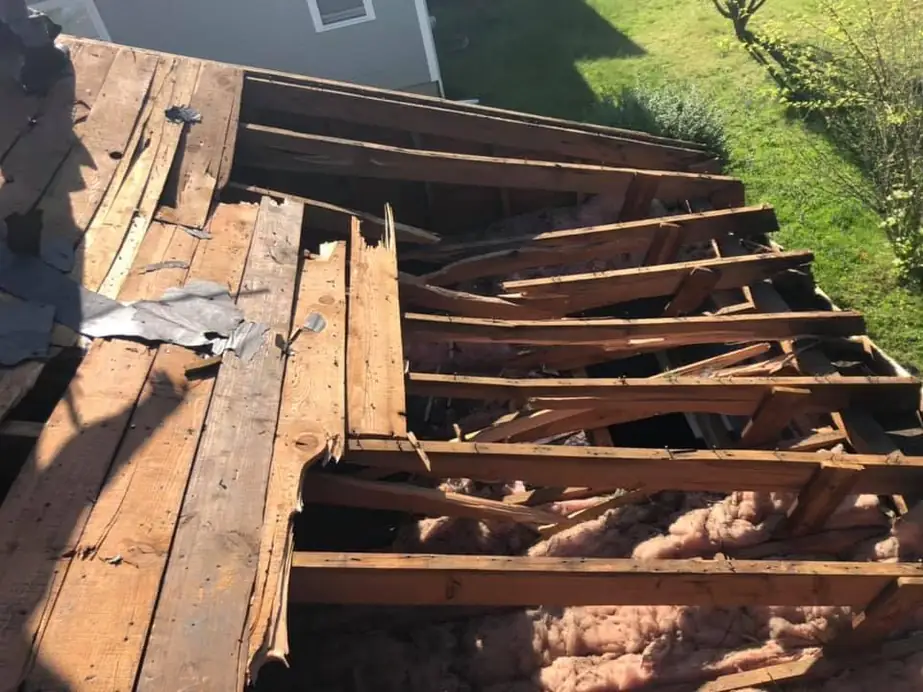
Storms roll through Northern Rhode Island hard, with wind driven rain, downed branches, and gusts that lift shingles nobody notices until the next rain finds its way in. Roof damage after a storm isn't always obvious standing in the driveway. Some of it takes a day or two to show itself, and some of it stays hidden until the next storm finally pushes water past a gap that a lighter rain never reached.
What to check from the ground, safely
- Shingle pieces or granules scattered in the yard, gutters, or downspout runoff
- Bent, torn, or pulled away gutters and downspouts
- Dented soft metal on vents, caps, or flashing
- Branches or debris resting directly on the roof surface
- Shingles that look lifted, curled, or out of line along any edge or ridge
Signs the storm got inside
A new water stain on a ceiling, a musty smell in a closet under the roofline, or a damp patch in the attic if you can safely check it, are all worth paying attention to. None of these show up instantly. Sometimes it takes a day or two of water working its way along the decking before it finally lets go inside the house, so it's worth checking again a day or two after the storm even if everything looked fine right away.
Why acting fast after a storm actually matters
A missing shingle or a cracked vent boot right after a storm is usually a small, contained problem. The same gap left through a second or third storm gives water more chances to work its way further under the roofing system, into insulation, along framing, and into places that are a lot harder to dry out and repair than the original spot ever was. Prolonged moisture sitting somewhere it shouldn't also tends to cause problems that go beyond the roof itself over time. None of that requires panic, it just means a fast look after the first storm is worth more than a thorough one after the third.
What a storm damage visit from Tim actually looks like
Tim comes out, gets on the roof himself, and checks the obvious trouble spots first: ridges, valleys, flashing around chimneys and vents, and any section where shingles looked off from the ground. If the attic is accessible, he'll check there too, since that's often where a leak shows itself before it ever reaches a ceiling. If the roof needs emergency tarping to keep more water out before a repair can happen, that gets handled the same visit. Everything gets written down in a plain, honest estimate, so you know exactly what's being fixed and why before any work starts.
A real example, a leak that started with an evening text
A homeowner in Lincoln texted Tim one evening after a storm had sent water down through an upstairs ceiling. Tim answered directly and was on the roof the next morning. The leak traced back to a cracked vent boot and a few lifted shingles nearby. We replaced the boot, patched the shingles, and checked the surrounding flashing while we were already up there. It was a small, contained repair, handled fast, with no pressure toward a bigger job than the roof actually needed.
What to actually do in the first day or two
- Take a few photos of anything you can see clearly from the ground
- Note the date and rough time the storm came through
- Keep an eye on ceilings and closets under the roofline for the next several days
- Get someone up there before the next rain if anything looked off
Not every storm call ends up being a repair. Sometimes a roof that took storm damage was already close to the end of what it had left, and the storm just exposed that faster than it would have shown up on its own. That's a judgment worth making in person, on the roof, not off a photo from the ground, which is exactly why the first visit is about finding out what's actually going on before anyone talks about what comes next.
A small leak found early is a quick fix. The same leak ignored through a second storm gets a lot more expensive to trace and repair, and Rhode Island rarely gives you much time between storms. If you saw anything after the last one, or you have water coming in right now, call or text Tim at 401-233-ROOF. He's reachable 24 hours a day for emergency tarping and repair, and he'll give you a straight answer about what the roof actually needs, in writing, before any work starts.
Tim's Roofing and Siding, 401-233-ROOF
Call 401-233-ROOFMore articles
How Long Does a Roof Last in Rhode Island?
What actually wears a Northern Rhode Island roof out, and the signs worth paying attention to before a small problem gets expensive.
Roof Repair or Replace? How to Actually Tell
A plain look at how to tell whether a problem calls for a repair, or it is honestly time to replace the whole roof.